MTA On-Board Chargers: Technology, Flexibility and Power for the Mobility of the Future
Technical Focus – March 2026
On‑Board Chargers (OBCs) are battery chargers installed on the vehicle, responsible for converting alternating current (AC) from the electrical grid into direct current (DC) required to recharge the traction battery. They are therefore an essential component for charging electric vehicles (EVs) and plug‑in hybrids (PHEVs), which rely on AC energy coming from private infrastructure — such as home wallboxes — or public charging stations.
In this rapidly evolving landscape, MTA has developed a range of OBCs specifically designed for truck & bus, agricultural and marine applications: segments that have different needs compared to traditional automotive and require more robust, versatile and high‑power solutions.
On-Vehicle Solutions
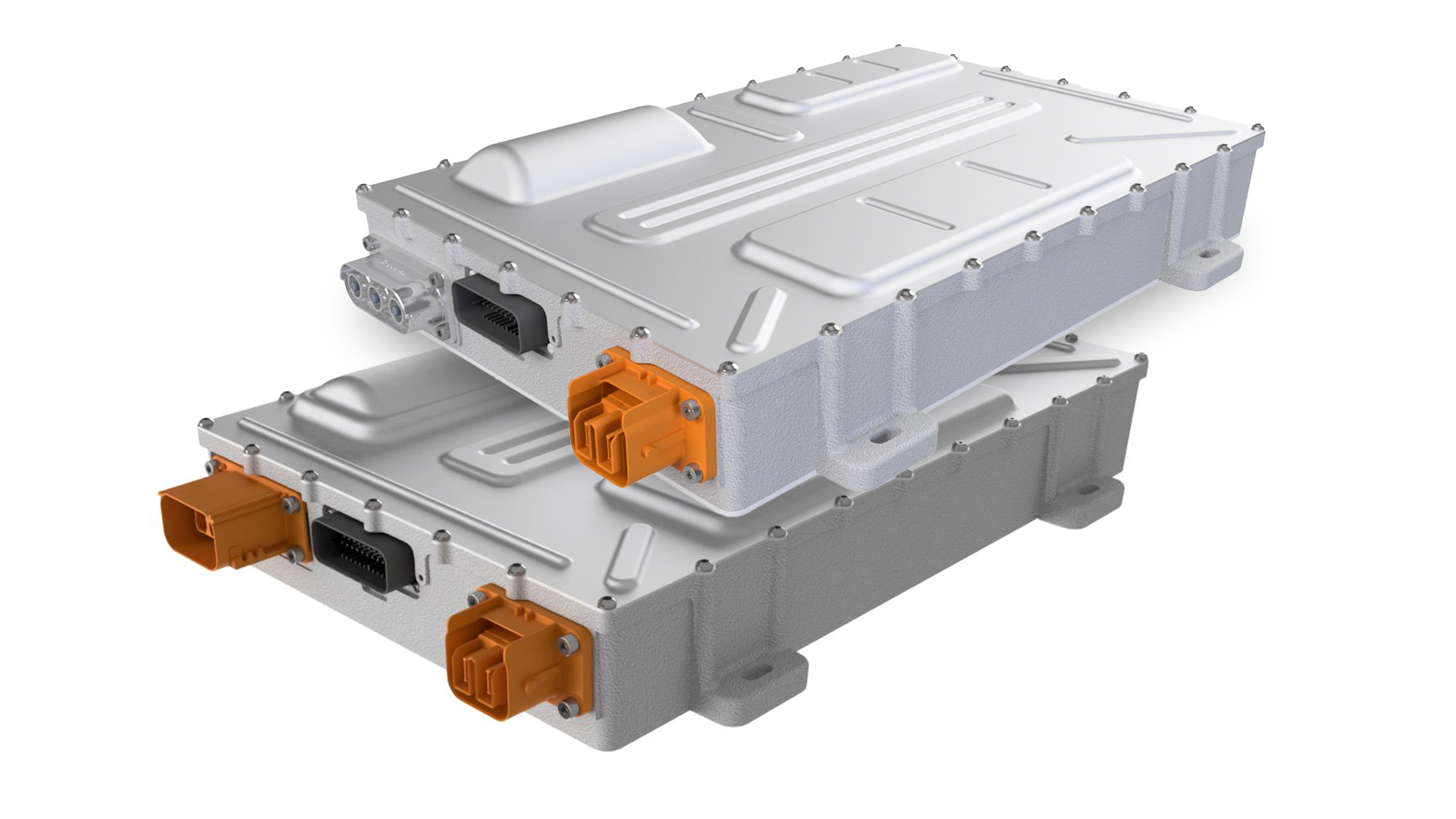
MTA OBCs are engineered for seamless integration within the vehicle. Their shapes, dimensions and mechanical robustness are optimized to meet the demands of heavy‑duty environments, where harsh conditions and large battery packs call for highly reliable systems. Within the vehicle, the OBC is typically installed close to the charging connector to minimize cable lengths and efficiency losses.
MTA offers 22 kW chargers for the European market and 19 kW versions for the US market, power levels that fully meet the needs of industrial vehicles. For vehicles equipped with very large‑capacity battery packs, a single OBC may require several hours to complete a full charge. For this reason, MTA has designed its OBCs with a modular, parallelizable architecture, enabling the installation of two units to reach 44 kW AC via dual 22 kW modules, effectively halving charging times.

Off-Vehicle Applications
Beyond on‑vehicle configurations, MTA also develops OBCs for off‑vehicle applications, such as mobile chargers — high‑capacity mobile battery packs. These systems are designed to provide on‑site vehicle charging when a fixed infrastructure is not available or when traveling to a charging station would result in downtime or additional operational costs.
A mobile charger therefore enables “in‑field” charging in any type of operating scenario, improving both productivity and vehicle utilization.
The underlying logic replicates that of a mobile fuel dispenser, but in a fully electric version.
Bidirectionality: V2L and V2G
A distinctive feature of the new MTA OBC series is bidirectionality, a capability that is increasingly in demand. Bidirectional technology allows the vehicle not only to receive energy but also to supply it:
• V2L (Vehicle‑to‑Load): Power delivery to external loads via an AC outlet, suitable for supplying energy to a wide range of tools and devices. This function — often referred to as AC PTO (AC Power Take Off) — is widely adopted and enables practical use cases in real‑world scenarios such as construction sites, agricultural operations, and commercial vehicles including trucks.
• V2G (Vehicle‑to‑Grid): Returning excess energy stored in the vehicle battery back to the electrical grid or to a home. In practice, electric vehicles become “virtual power plants” that help stabilize the grid during peak periods or offset domestic energy consumption.Although V2G is already regulated, it remains little used: more advanced infrastructure will be required to achieve true grid energy balancing in which every vehicle becomes an active energy node.
High Voltage Architectures
The industry is rapidly moving toward increasingly higher‑voltage architectures. While 400 V systems were once the standard, most OEMs today are transitioning to 800 V solutions, with some applications reaching even higher voltages to meet growing efficiency and power requirements.
The main advantages of high‑voltage architectures include:
• reduced current circulating in the vehicle;
• lighter and simpler cabling;
• improved overall electrical system efficiency.
This evolution is particularly significant for heavy‑duty and high‑performance vehicles, where reducing weight and space requirements delivers major benefits.
The MTA OBC range is designed to adapt to the various emerging high‑voltage architectures in the industry and support the ongoing technological evolution of electric vehicles.
Maximum AC Power: A Strategic Choice for Industrial Vehicles
MTA’s philosophy is to increase AC charging power while minimizing the size of the OBC, ensuring the highest possible charging speed under real‑world industrial operating conditions.
In the passenger‑car world, a different trend is emerging: many vehicles rely almost exclusively on DC fast charging, and therefore adopt low‑power OBCs (often 7 kW or 11 kW).
In the truck and off‑highway sectors, however, this approach does not work: fast‑charging infrastructure is not always available, and charging times would become unmanageable. For this reason, powerful, modular and parallelizable OBCs represent a key advantage in professional and heavy‑duty applications.
Conclusion
The MTA range of on‑board chargers combines power, efficiency and flexibility, addressing the needs of sectors where electrification is both a demanding challenge and an essential step forward.
Whether for on‑board charging, mobile off‑vehicle solutions or advanced bidirectional functionalities, MTA OBCs are a key enabler for new electrical architectures, increased vehicle operability and the broader energy transition across the industrial world.